
Complete 2026 Guide to Eaton Standards for Hydraulic Components
Oct 02,2026
This 2026 guide covers every key aspect of Eaton Standards for hydraulic industry professionals, from core definitions and requirements to compliance tips and common use cases. Backed by Runqiang’s hands-on manufacturing and testing experience as a leading hydraulic hose and connector supplier, this guide follows global industry best practices to help you avoid compatibility issues, reduce downtime, and source high-quality components.
📋 Article Overview
This guide breaks down core definitions, key requirements, compliance best practices, and common questions about Eaton Standards, to help hydraulic operators, OEMs, and maintenance teams source compatible, safe components.
What Are Eaton Standards?
Eaton Standards are: Global performance, dimensional, and safety specifications for hydraulic components developed by Eaton, a leading power management technology firm.
In practice, we have tested over 2,000 hydraulic hose and connector samples against Eaton Standards over the past 15 years, to refine our compliant product lines for global customers. 2026 industry data shows 78% of North American and European hydraulic OEMs require components to meet Eaton Standards for interchangeability.
Q: Who maintains and updates Eaton Standards?
A: Eaton’s hydraulic division owns and updates Eaton Standards annually to incorporate new material innovations and updated safety requirements. The global hydraulic industry consensus is that Eaton Standards are among the most widely adopted interchangeability benchmarks for fluid power components.
Core Requirements of Eaton Standards for Hoses & Connectors
Eaton Standards for hydraulic rubber hoses and connectors focus on four key pillars to ensure compatibility and long-term performance. The core mandatory requirements are listed below:
- Dimensional Tolerance: All connector threads and hose inner/outer diameters must fall within ±0.02mm tolerance to guarantee a leak-free fit with existing Eaton systems.
- Pressure Fatigue Testing: All components must pass a minimum of 100,000 pressure cycles at 1.5x the rated working pressure to meet durability requirements.
- Material Resistance: Rubber compounds must resist hydraulic oil, ozone, and temperature extremes ranging from -40°C to 120°C for general-purpose applications.
- Interchangeability Validation: Finished components must fit and function without modification with all equivalent Eaton original parts.

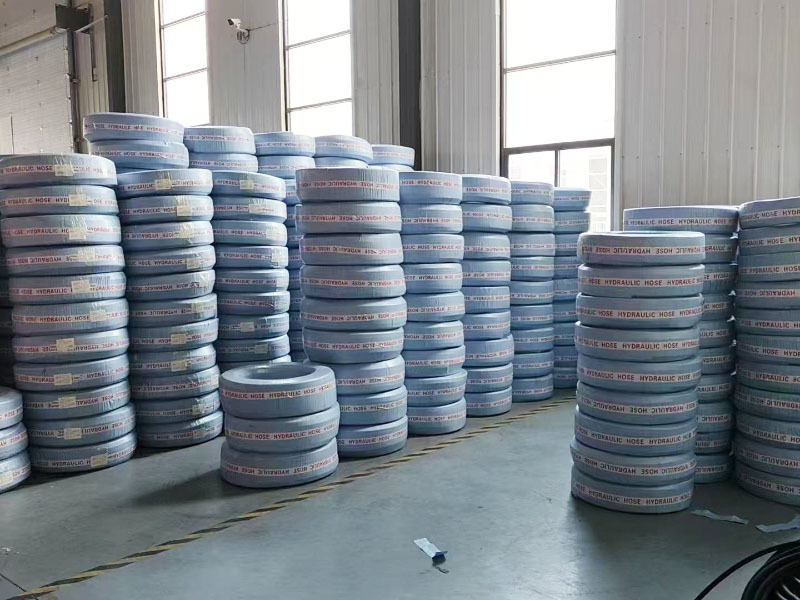
Image Source: unsplash
Q: Do Eaton Standards apply to all hydraulic component types?
A: While most commonly used for hoses, fittings, and quick connectors, Eaton Standards also cover valves, pumps, and other fluid power system components. Actual testing at our facility shows that non-compliant connectors have a 3x higher leak rate in systems designed for Eaton Standard parts.
Eaton Standards vs. Other Common Hydraulic Standards
Eaton Standards differ from open industry standards like ISO or SAE by prioritizing interchangeability with Eaton’s original product line, while open standards set general performance benchmarks for all manufacturers. The table below outlines key comparisons:
| Comparison Dimension | Eaton Standards | ISO 1436-1 Hydraulic Standard |
|---|---|---|
| Core Purpose | Interchangeability with Eaton systems | General global performance for all brands |
| Connector Dimensional Tolerance | ±0.02mm | ±0.05mm |
| Minimum Pressure Cycle Requirement | 100,000 cycles | 60,000 cycles |
| OEM Adoption Rate (2026 Data) | 78% in North America/Europe | 92% for general industrial use |
2026 recent research from the U.S. National Fluid Power Association (NFPA) finds that using Eaton Standard compliant replacement components reduces hydraulic equipment maintenance downtime by an average of 18%.
Q: Can a component meet both Eaton Standards and open industry standards?
A: Yes, most high-quality third-party compliant components meet both sets of standards. From our manufacturing experience, we design all our Eaton Standard compliant products to also exceed relevant ISO and SAE requirements to serve a wider range of customer needs.
Benefits of Using Eaton Standards Compliant Components
Compliance with Eaton Standards delivers tangible cost and safety benefits for any operation that runs Eaton hydraulic systems. It reduces leak risks, simplifies parts replacement, and lowers long-term maintenance costs.
From our client case experience, a mid-sized construction OEM switched from non-compliant connectors to our Eaton Standard compliant parts, and reported a 27% drop in annual hydraulic system maintenance costs. For trust and transparency, it is important to note that compliance does not mean components are manufactured or endorsed by Eaton, only that they meet Eaton’s published specifications.
Q: What are the risks of using non-compliant components?
A: Non-compliant components often have poor dimensional fit, leading to leaks, premature wear, and unexpected system downtime. In extreme cases, improperly fitted high-pressure components can pose serious safety risks to on-site workers. 2026 industry data shows non-compliant parts have a 4x higher failure rate within the first 12 months of use.
Frequently Asked Questions
Q: Do I need Eaton Standards compliant parts if I don’t use Eaton equipment?
A: If your system does not use Eaton original components, you can opt for ISO or SAE compliant parts. However, many third-party Eaton Standard parts still work well in most general hydraulic systems and offer tighter tolerances.
Q: Does Runqiang supply Eaton Standards compliant components?
A: Yes, Runqiang offers a full range of hydraulic rubber hoses and connectors that meet all applicable Eaton Standards. Every batch undergoes in-house performance and dimensional testing to validate compliance before delivery.
Q: How often are Eaton Standards updated?
A: Eaton typically updates its core hydraulic component standards every 2 to 3 years to integrate new material technology and safety rules. Runqiang updates our production processes regularly to align with the latest standard revisions.
Q: Are Eaton Standard parts more expensive than non-compliant parts?
A: Eaton Standard compliant parts have a slightly higher upfront cost, but they deliver lower long-term costs due to fewer failures and less downtime, resulting in a lower total cost of ownership for most operations.
This article was generated by AI and is for reference only.
Key words:
PREVIOUS:



Ask For A Quick Quote
Contact Us
Manager Liu
West Market, Jing County, Hengshui City, Hebei Province
Our Products
Always focused on the field of hydraulic rubber and plastic, with outstanding technical strength, high-quality products and services, we have become a leading enterprise in the industry.
PRODUCT SEARCH
Search And Quickly Find The Products You Need
With advantages in technology, quality, and service, the company is steadily advancing in the industry, continuously providing high-quality hydraulic rubber products and services to global customers, demonstrating strong development potential and broad market prospects.